Changnyeong Sports Park, home of Changyeong WFC, is one of the more rural grounds in the WK League. Although it’s a long way from the capital area, it’s reasonably close to other major cities such as Daegu and Busan. The sports park opened in 2010 and comprises seven football pitches, two baseball fields, an archery range and a gateball course, as well as indoor facilities. Changnyeong WFC have played at the sports park’s main stadium ever since their league debut in 2018.
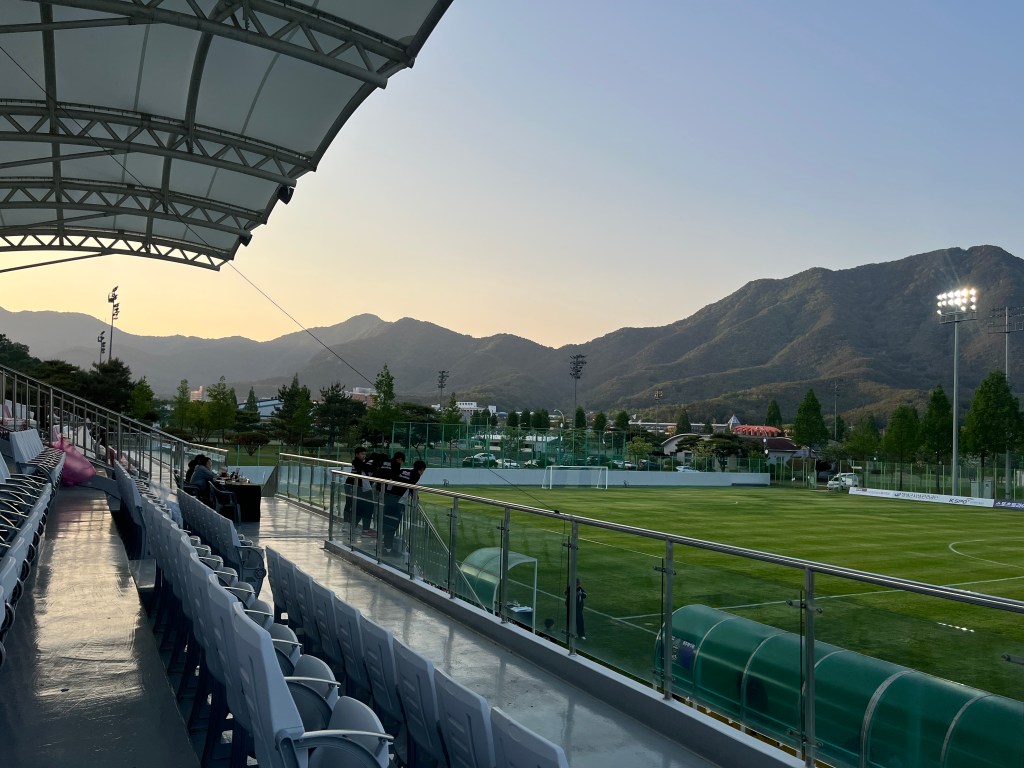
The stadium
The ground itself is fairly standard for a WK League outfit, with one stand to the southwest side. Access to the seating area is via the stairs just inside the main entrance of the stand. You do not need a ticket. Toilets can be found downstairs, inside the building itself — just don’t make a wrong turn or you might end up on the pitch. You’re lucky if you can see the whole pitch from your seat, but Changnyeong’s home matches don’t tend to be teeming with people so it’s easy enough to stand up, move around, and find yourself a better view for any key moments. There is a roof over the central part of the stand providing some shelter from the elements. Be wary of almost-invisible metal cables running between the roof and the front of the stands at just about average head height in front of the first row of seating. Changnyeong Sports Park may not be the flashiest stadium in the league, but sitting in the valley among lush green mountains as the sun sets, there are certainly worse places to spend an evening watching the football.

As with most other teams in the league, there’s no strict enforcement of a separate away end — before the match and during half time you’re as likely to see rival fans mixing and exchanging pleasantries as anything else. During the match itself fans congregate and cheer behind the dugout of their respective team, so make sure you’re in the right place if you’re supporting one team or the other. Changnyeong’s most dedicated fans (who sit, or stand, to the left as you enter the seating area) are small in number but by no means lacking in passion, donning replica jerseys and banging a drum in support of their team throughout matches.
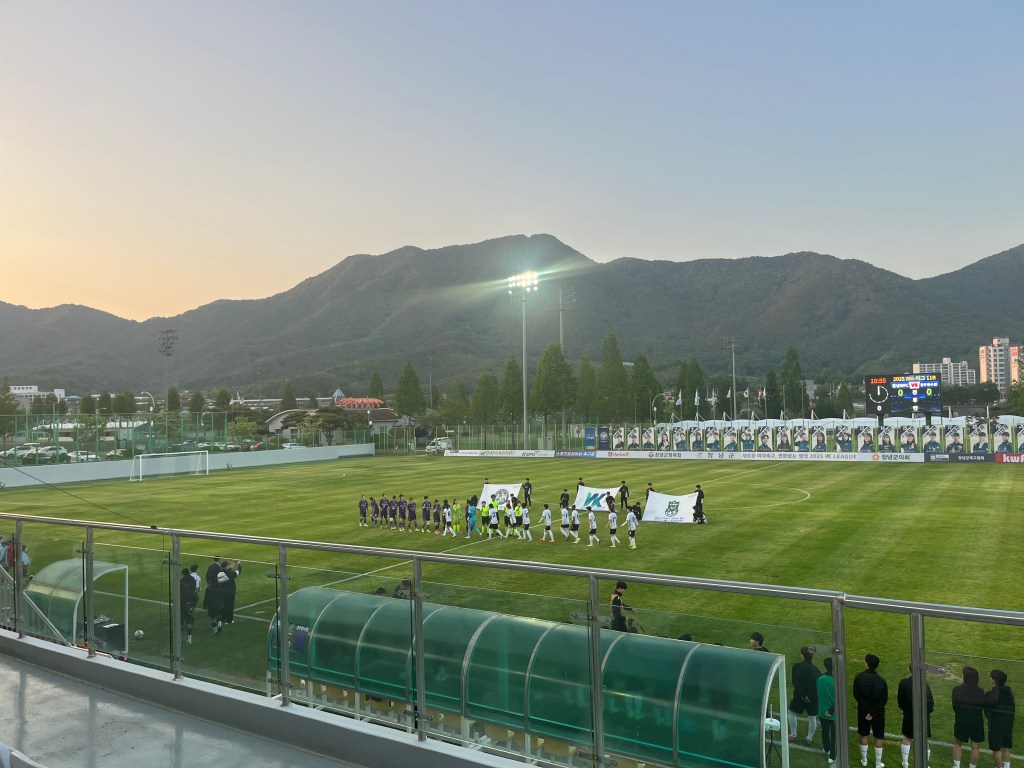
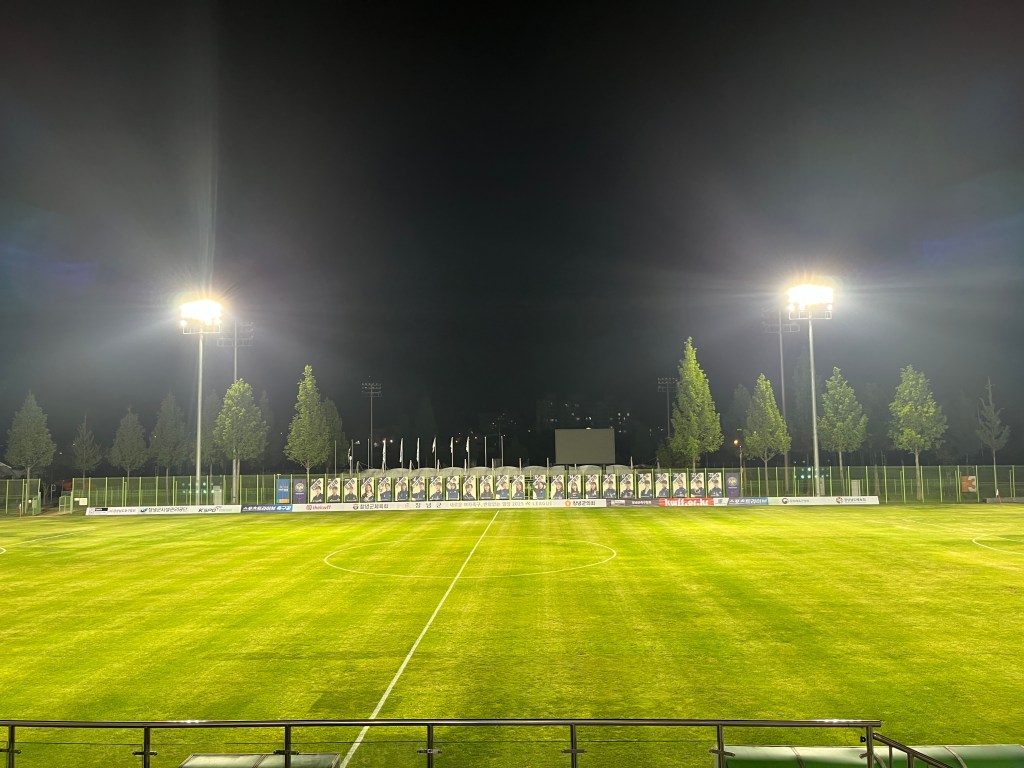
Opposite the stand, banners display Changnyeong’s current players and staff beneath a basic digital scoreboard. There’s not much else to see here (besides the football itself, obviously). For the time being, Changnyeong WFC simply doesn’t have the means or manpower for more sophisticated branding or the matchday ‘events’ you might encounter at some of their rival teams’ home grounds, or at many men’s football matches. After the game, players head to their team coaches right outside the stadium entrance, where some spectators will wait to chat, take photos and get autographs — a key part of the WK League experience for keen fans.
How to get there
If you’re arriving by car, you will have no trouble finding a place to park. If you are visiting the venue during a large tournament, you may be directed towards a large car park closer to the main road, but for a standard WK League matchday, you can continue driving into the sports park itself and find a spot for your car right next to the pitch itself.
If you’re making the trip by public transport, it might be a bit more of a trek. That said, if you’re an intrepid groundhopper who can navigate a bus timetable, it can certainly be done. Changnyeong Sports Park is 15-20 minutes’ walk away from Bugok bus terminal. With buses from Seoul Nambu, Busan and Daegu Seobu, as well as a number of smaller local cities, Bugok is easy to get to, but you might have more trouble getting away again after an evening fixture as there are no late buses departing from the terminal. If you can get from Bugok to Changnyeong itself, perhaps by taxi, there is a late bus heading to Daegu, but it’s a slow route with stops around the countryside, so you still won’t arrive in the big city until almost sunrise. If you don’t fancy sleeping on an all-stop country bus, there are a number of motels close to Bugok terminal.
In the area
For a pre-match bite to eat, there are a handful of restaurants and convenience stores close to the bus terminal, but nothing within the Sports Park itself, so make sure to bring anything you might require during the match.
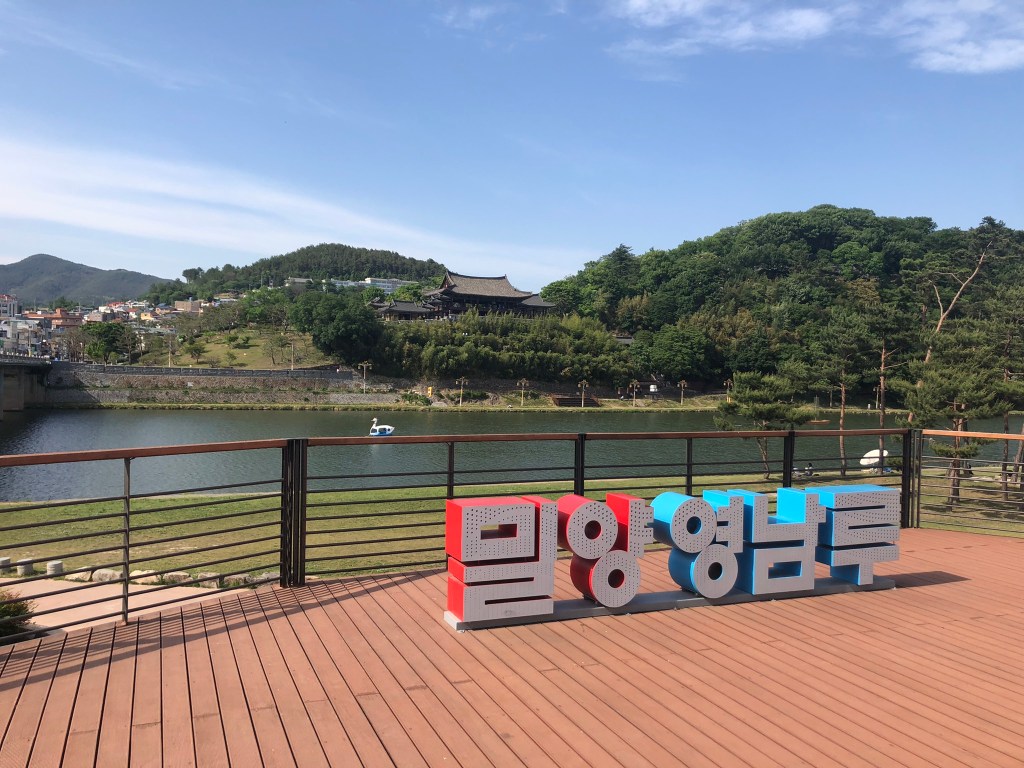
If bus timetables force you to stay in the area overnight, or you’re just looking to make a trip out of it, the area boasts some fantastic scenery and great hiking. Nearby Hwawangsan is included in the Korea Forest Service’s list of 100 peaks, a popular ‘bucket list’ challenge for Korean hikers. Hwawangsan is particularly known for azaleas in the spring and silver grasses in the autumn but if you can manage the hike, it’s worth it at any time of year for views down the valley and the fortress wall running along its ridge. Changnyeong is home to the Upo wetlands, the largest wetland area in the country, with walking trails allowing you to see various species of plant life, fish and birds, including the ibis seen in Changnyeong WFC’s crest. The county also borders the city of Miryang, which boasts a number of historical and cultural attractions, with some great walks and mini-hikes within the city itself, not to mention lots of great places to eat gukbap.
Groundhoppers may be able to combine a trip to Changnyeong with other nearby football clubs — there are men’s teams in Changwon; Gimhae; Jinju; and Busan to the south, Gyeongju; Ulsan; and Pohang to the northeast, and Daegu to the north. Changnyeong’s nearest WK League rivals are Gyeongju KHNP, but with league fixtures happening concurrently it will probably be tricky to tick off both grounds in one quick trip.


 WK League News
Leave a comment