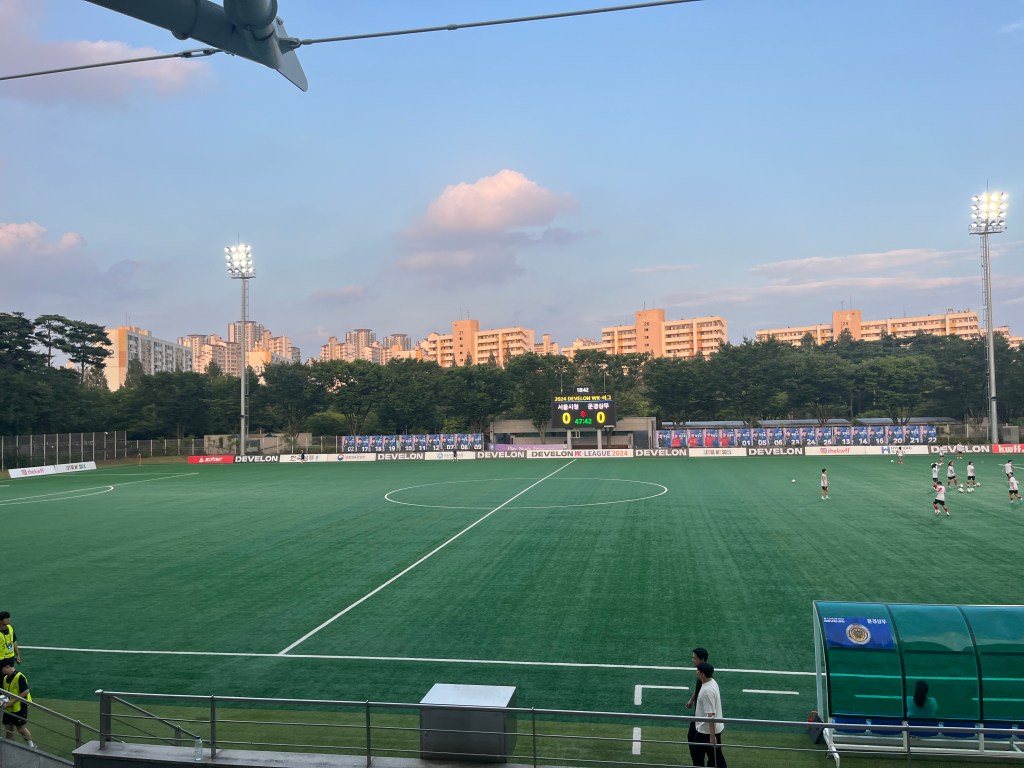
Just to the north of Seoul World Cup Stadium, across a paved square, sits an artificial turf pitch with a single stand of seating, almost hidden among the trees. This modest ground is the stadium’s auxiliary pitch, home of WK League side Seoul City Amazones. Being located in central Seoul, just minutes’ walk from a subway station, makes it one of the most easily accessible WK League grounds for many, whether you live in Korea or you’re visiting for a short time.

The stadium
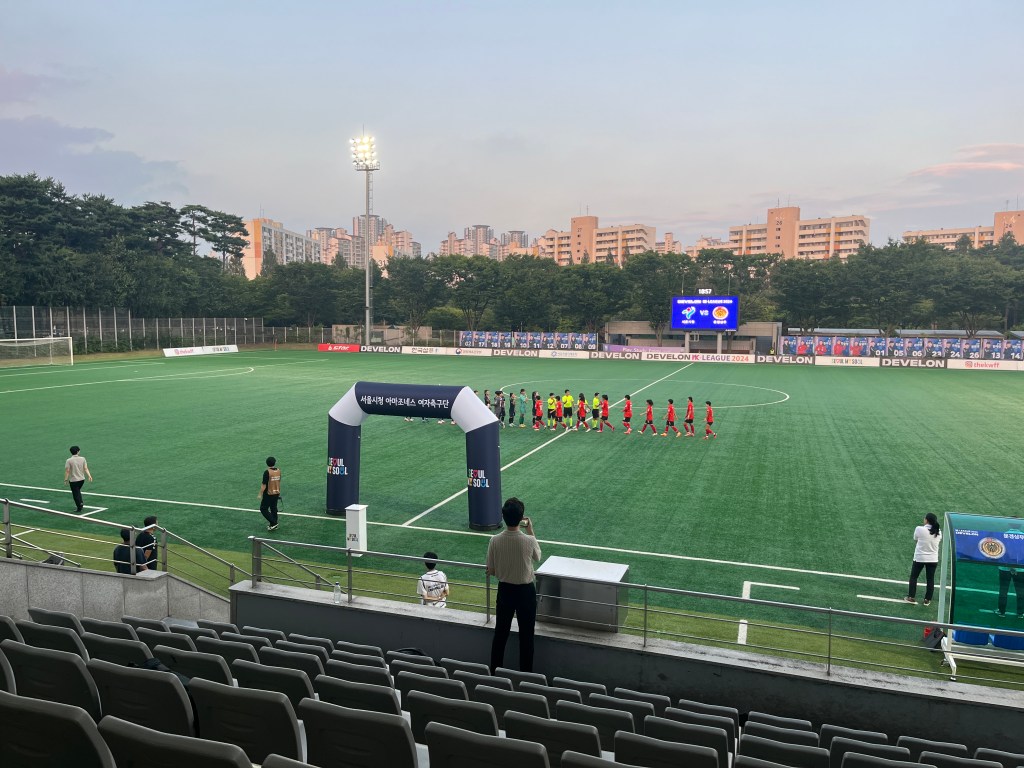
Seoul’s home is unique in being the only artificial pitch in use by a WK League side. It’s surrounded by trees on all sides with a basic digital scoreboard directly opposite the seating. The leafy surroundings make for a surprisingly pleasant atmosphere. Fans sit behind the dugouts of their respective teams to cheer — Seoul’s dugout is at the northern end of the pitch, the away dugout at the southern end. There is a small roof over the central part of the seating area, but it’s still quite exposed, so bring a raincoat/umbrella/sunglasses/cap as appropriate just in case. You do not need a ticket.
Seoul’s fans may at first glance seem less equipped than some of those elsewhere in the league, with no replica shirts or club-branded cheering paraphernalia, but they will show their enthusiasm once things get underway. Without a club store or any recent replica kit orders, it’s not easy to get hold of Seoul goods unless you’re inclined to make your own, although you may see some keen supporters and family members proudly sporting player-worn shirts from years gone by.
How to get there
Seoul World Cup Stadium has its own station on Line 6 of the Seoul Metropolitan subway system. If you take exit 3 and keep walking, you’ll find yourself at the auxiliary pitch almost immediately. Approaching from the subway station, look out for a footpath leading off the square between the trees which will deliver you to the spectator entrance at the top of the stand. The subway is probably the easiest way to reach the ground if you’re not familiar with the area, or if you don’t have reliable mobile data to keep checking a map. Depending on where you are travelling from, it may be more convenient to get off the train at Digital Media City station (Line 6, Airport Line, Gyeongui-Jungang Line), head for exit 2 and walk for just a few minutes, approaching the ground from the north. There are also dozens of local buses calling at various bus stops in the area. By public transport, the pitch is about 35 minutes from Seoul Station, and about 45 minutes from Seoul Express Bus Terminal.
It is possible to park close to the pitch, in one of the many car parks surrounding the World Cup Stadium, but it may be extremely difficult to find a space if there is an event taking place in the main stadium, so be sure to check. Bear in mind that driving in central Seoul can be a chaotic and stressful experience if you are not used to it, and major roads in the area will be very congested, especially during the evening rush hour — even if you have access to a vehicle, public transport is probably the quickest, easiest and safest option for visitors!
If you are searching for the ground on a Korean map application, type in (or copy and paste) 서울월드컵경기장보조경기장 for the pitch itself. If you’re driving, set your navigation for the north car park (서울월드컵경기장북측주차장) to avoid confusion. If arriving by taxi, you could aim for the subway station (서월월드컵경기장역) rather than the stadium itself and then follow walking directions as above to avoid confusion!
In the area
There is no end to the list of dining options in Seoul, but whether you’re looking for a quick bite before the match or something to bring along with you, head to the shopping complex underneath the main World Cup Stadium. Fuel up at the food court, or do as the locals do and choose something from the deli counter at Homeplus — fried chicken and chobab in particular are popular choices for a football match, but there are various other sandwiches, salads and snacks available too.
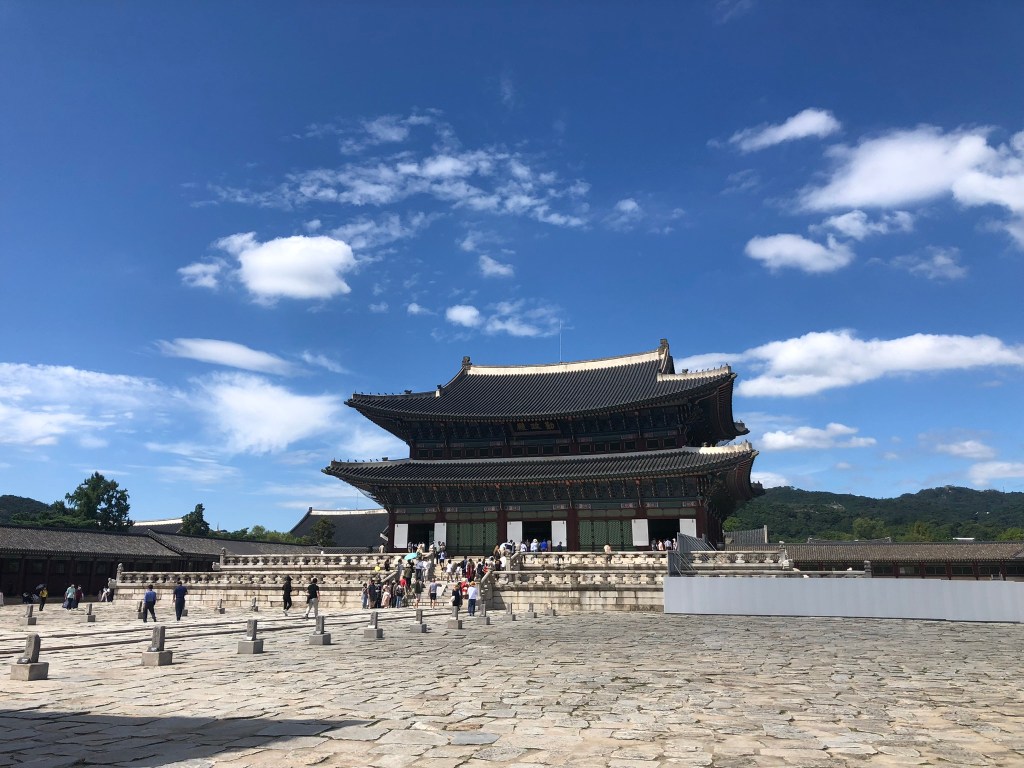
As for what else to do while you’re there, Seoul is the capital and largest city in Korea, with no end of historical and cultural sites, museums, galleries and events. It would be almost as difficult to list them all as it would be to see them all — no matter how many times you visit Seoul, there will always be more and as a major tourism hub, the city’s main attractions are very well documented online in various languages. If it is your first visit to Seoul, you shouldn’t miss the iconic Gyeongbokgung, a former royal palace in the centre of the ancient city. Close by the palace in Gwanghwamun Square is the excellent National Museum of Korean Contemporary History, which is free to enter and tells the story of modern Korea through various artifacts and interactive exhibits. The National Museum of Korea in Yongsan-gu is also well worth a visit. Besides these classic options, there are all sorts of quirky museums and galleries all over the city exploring all aspects of Korean culture and beyond.
For a more outdoorsy itinerary, the city is also home to thousands of parks and green spaces, hiking trails, cycle paths and walking routes. Bukhansan, one of the country’s most famous mountains, overlooks Gyeongbokgung, with a number of hiking paths easily accessible by public transport. Cycling alongside the Han river is a popular activity for locals and tourists alike. For a unique inner-city stroll, visit Cheonggyecheon, a natural stream that was previously filled with concrete and covered with an expressway, but was restored in the early 2000s and has since become a popular spot for Seoullites to step away from the bustling city streets.
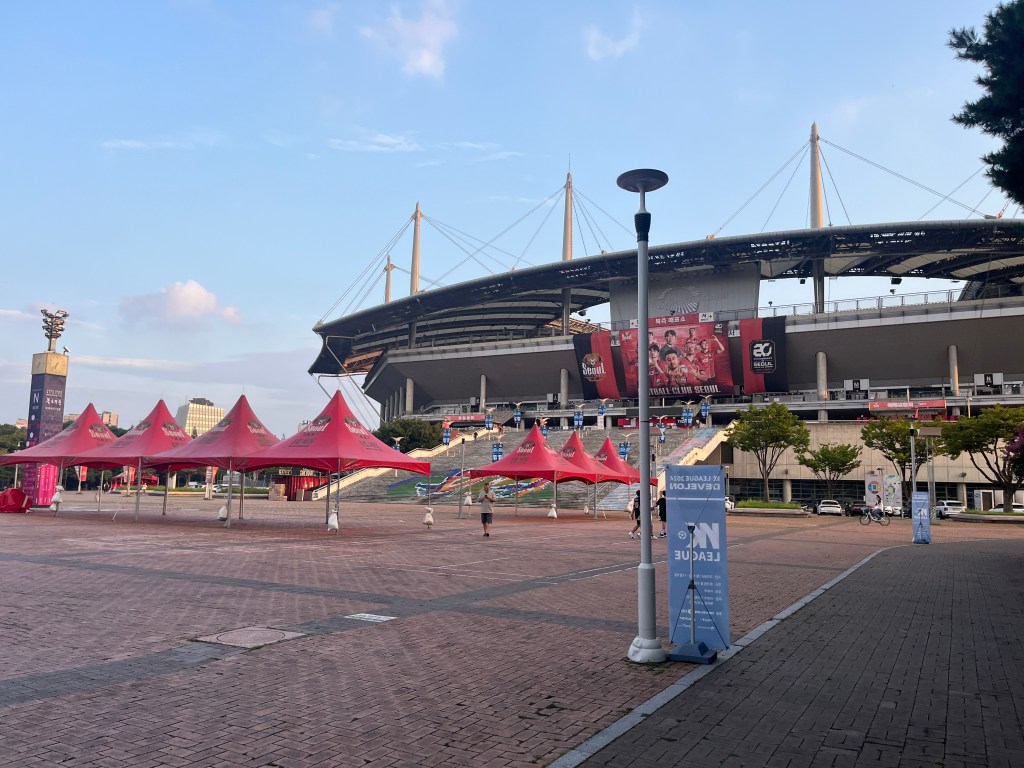
Groundhoppers will have no issue finding other football stadia in the city — besides the Amazones, Seoul is home to two professional men’s teams and a whole host of semi-professional, amateur, and non-league football clubs. K League 1 side FC Seoul are nearest, playing mere metres away in the main World Cup Stadium, while K League 2’s Seoul E-Land can be found a short hop (about 45 minutes by public transport, or 30 by bike) across the river in Mokdong Sports Complex. With a good number of other K League 2 teams based in Gyeonggi-do, the province surrounding Seoul, it shouldn’t be too hard to find some other football to watch nearby during the league season. Seoul City’s nearest WK League rivals are Incheon Hyundai to the west and Suwon FC to the south.
In case you missed it: Stadium guide: Changnyeong Sports Park


 WK League News
Leave a comment