Korea’s women lifted the trophy at the EAFF E-1 Football Championship for the first time since the first edition of the tournament 20 years ago, after beating Chinese Taipei (Taiwan) in the final match of the competition at Suwon World Cup Stadium on Wednesday evening.
The team’s first match of the tournament last Wednesday, against P.R. China, ended in a draw thanks to an injury time stunner from veteran Ji Soyun. Playing against defending champions Japan in Hwaseong on Sunday, it was youngster Jeong Dabin’s turn to shine, levelling the score in the 86th minute to pick up another point. With China and Japan both having beaten the Taiwanese side, there was all to play for on the final day.
With a win and a draw each, China and Japan sat equal on points as they lined up to play against each other on Wednesday afternoon. A win for either side would secure them tournament victory, while a draw would leave the door open for Korea. When the game ended 0-0, Korean fans were quick to do the maths, realising that a win against Taiwan, regardless of the score, would be enough for them to lift the trophy.
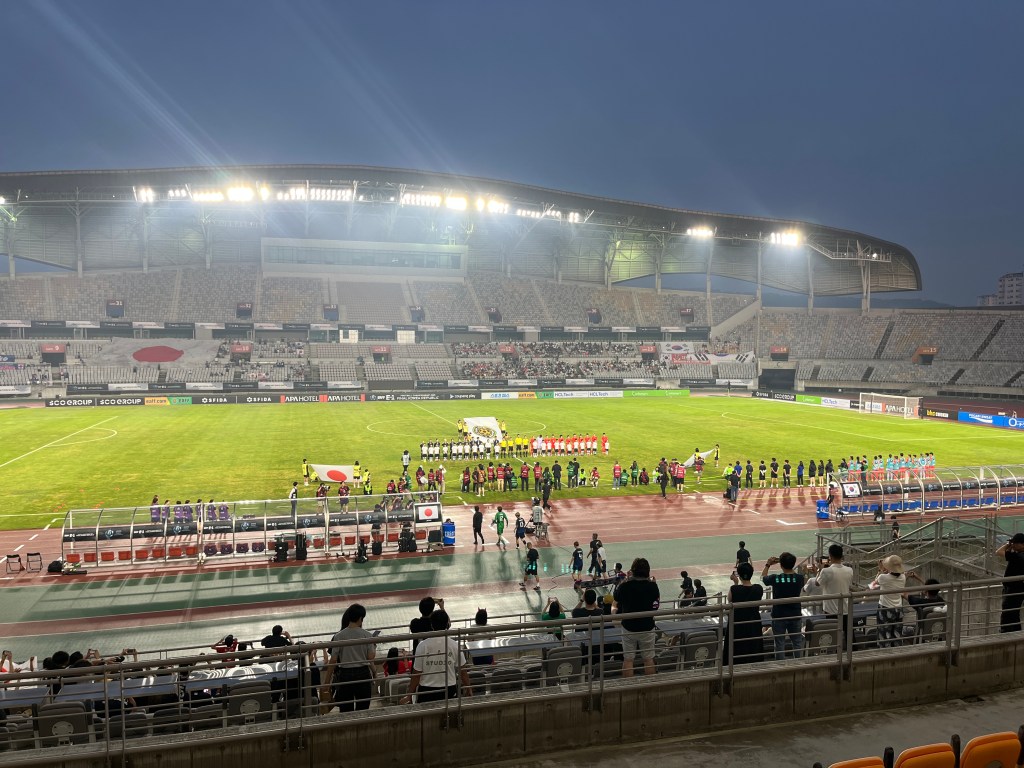
A quick explainer: a win for Korea would put three teams equal in first place with 5 points apiece. EAFF tournament rules do not take goal difference into account, instead using head-to-head results as tiebreakers. Since Korea’s matches against China and Japan ended 2-2 and 1-1 respectively, whereas Japan and China’s face-off was goalless, the hosts had the advantage in goals scored in the case of a tiebreak — they just needed to get the three points against Taiwan.
With four changes in the starting lineup, Korea started strong, dominating the first half, but despite creating chances, failed to convert any of them into an all-important goal. Most of the action was in Taiwan’s half, with goalkeeper Wang Yu-ting making some great saves despite struggling with the effects of an injury sustained early in the game. Just before half time, a mistake almost cost Korea greatly as the speedy Taiwanese forwards got the better of a Korean back line caught off guard, and managed to get a shot on goal.
With the score still at 0-0 at half time, Japanese fans in the stadium could be seen nervously looking on, some even cheering along with Taiwanese supporters, with Japan set to lift the trophy if Korea failed to win this match. Manager Shin Sangwoo brought on Moon Eunju and Kang Chaerim as substitutes for the second half, injecting fresh energy into the attacking play, and the pair immediately made an impact. Early in the second half, there was almost a repeat of the goal from Sunday’s match, with Moon sending a ball across the goal towards Jeong Dabin, but this time the youngster sent her shot just wide of the goal.
The hosts seemed to be edging closer and closer to scoring, but it wasn’t until a penalty kick in the 68th minute that they managed to take the lead, with Ji Soyun stepping up to the spot to score her 74th international goal for Korea. Jang Selgi doubled the lead at 85 minutes, sending a cross from Kim Hye-ri into the back of the net to seal the match and the tournament for Korea, creating a nice bit of symmetry in the process — Jang was the team’s first goalscorer in the opening match against China.
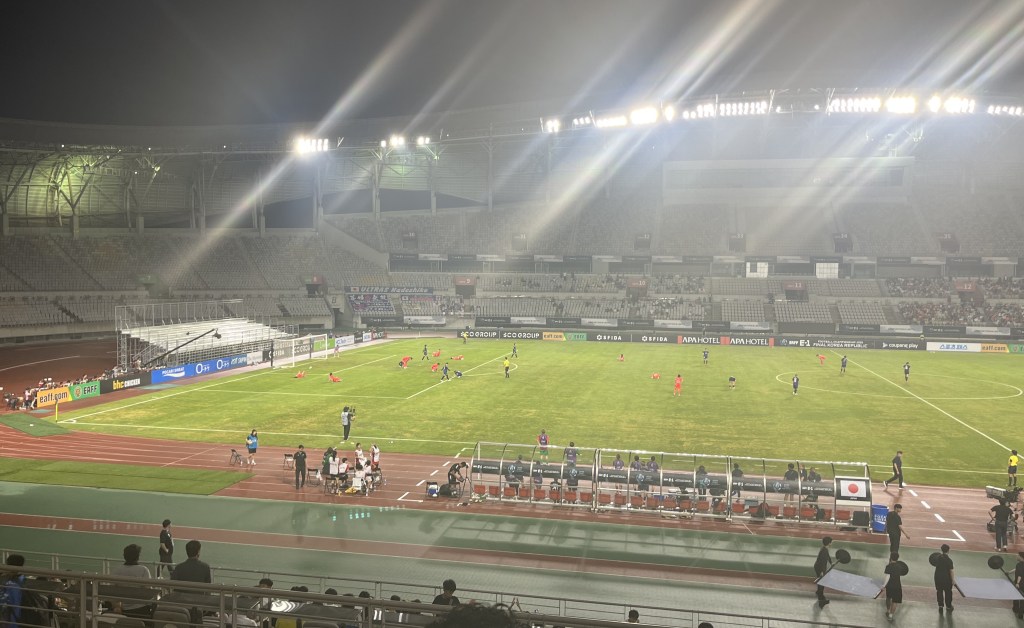
After the match, commemorative plaques were presented to the captains of all four teams and individual awards given out. Korea’s Kim Minjung collected the best goalkeeper award and Jang Selgi was named tournament MVP before the whole team stepped up to receive their medals and lift the trophy. The EAFF win is a huge confidence boost for Shin Sangwoo and his team as they look ahead to next year’s Asian Cup. There are still improvements to be made — Korea fumbled a number of goal opportunities throughout the tournament through a lack of confidence and ability in finishing, and there were some hairy moments where defensive players sent passes directly to the opposition.
Overall, however, the team appeared more organised and confident than in other recent outings, with the reliability of the squad’s senior members matched by the determination of the relative newbies. In particular, Seoul City’s Kim Minji, originally left out of the 23-woman squad but called up when it was confirmed that 26 players could be registered for the tournament, was constantly on the move. Whether driving forward with the ball, creating passing opportunities, or putting pressure on the defence, Kim’s resilience and passion were clearly evident and her work rate was nothing short of impressive. It’s also worth remembering that five players from Shin’s original squad for this competition were unavailable due to injury (four of them being replaced during the training camp, and one sustaining an injury in the first match), among them experienced striker Choe Yuri and captain Lee Youngju. Their presence could have allowed Shin to maintain more of a balance between old and new, rather than having to lean more on the younger players.
That said, with the Asian Cup fast approaching, the experience of competitive international football is invaluable for those young players, and should strengthen the squad overall. It’s a promising sign for Korean women’s football that besides the core members of the national team, there is an increasing number of worthy candidates on the fringes of the squad vying for places.


 WK League News
Leave a comment