Sangmu Women’s FC have called Mungyeong Civic Stadium their home since 2023, having previously been based in Boeun County, and before that, Busan. It’s a typical public stadium that will feel familiar to many Korean football fans, but it’s well worth a visit — if you have time to travel to Mungyeong in the middle of an afternoon on a weekday to take in a match.
How to get there
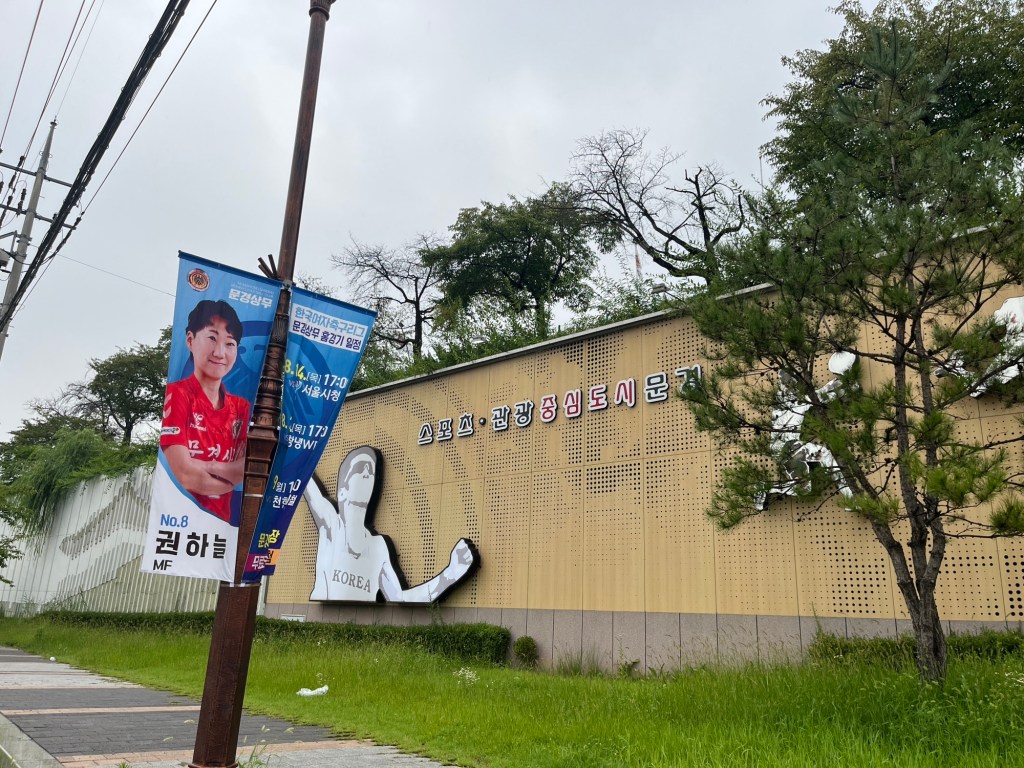
Mungyeong is right in the middle of Korea, on the border of Gyeongbuk and Chungbuk provinces. The civic stadium is located in Jeomchon district, with easy access by public transport or car. The Jeomchon bus terminal is around 20 minutes’ walk or a short bus ride away, with regular buses to cities across Korea, including Seoul — the trip from East Seoul bus terminal to Jeomchon takes about two hours. Jeomchon is also served by a local train line, for those travelling from elsewhere in Gyeongbuk. Mungyeong does have a KTX station, and although it’s a little further away, local buses 211, 212, and 213 will take you directly from station to stadium in around 45 minutes. Mungyeong’s local buses are free for all. There is also ample parking for matchgoers arriving by car — set your navigation for the stadium (문경시민운동장) and follow the small road leading uphill towards the car park on the west side of the stadium when you arrive.
What to expect
Mungyeong’s stadium is notable for its lack of floodlights, meaning Sangmu have to play their home matches in the late afternoon rather than the evening. With no weekend fixtures in the WK League this year, this can make it tricky for away fans to get to matches. However, Mungyeong regularly boasts the largest crowd in the league, with a passionate contingent of local supporters making themselves heard from the stands.
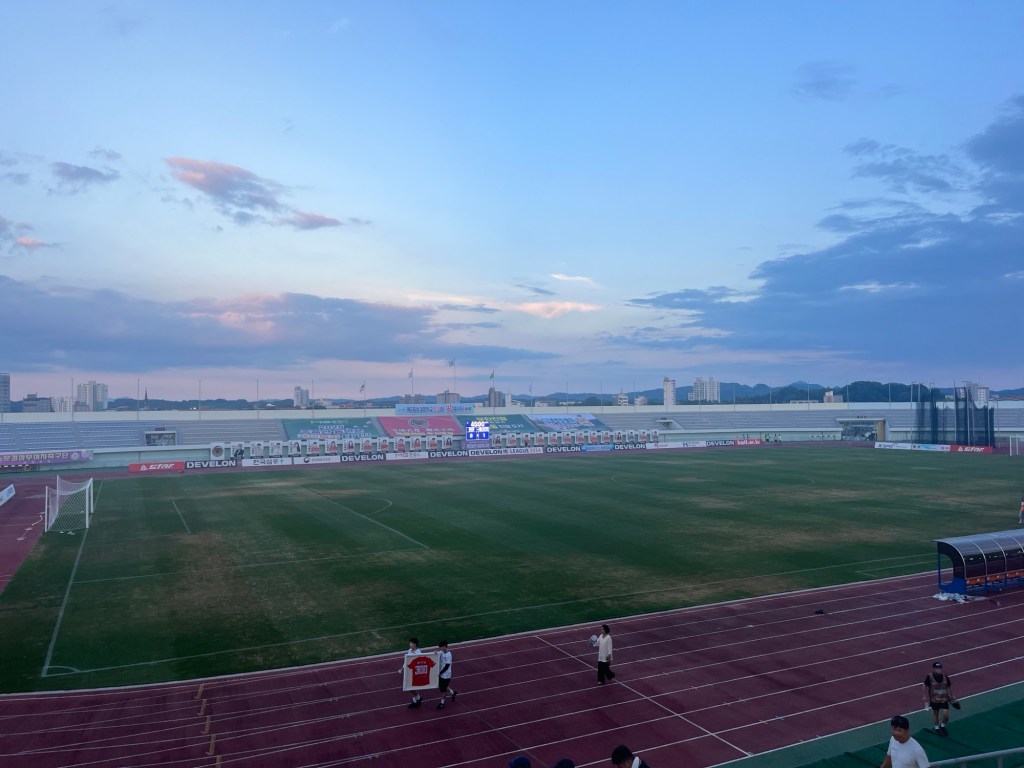
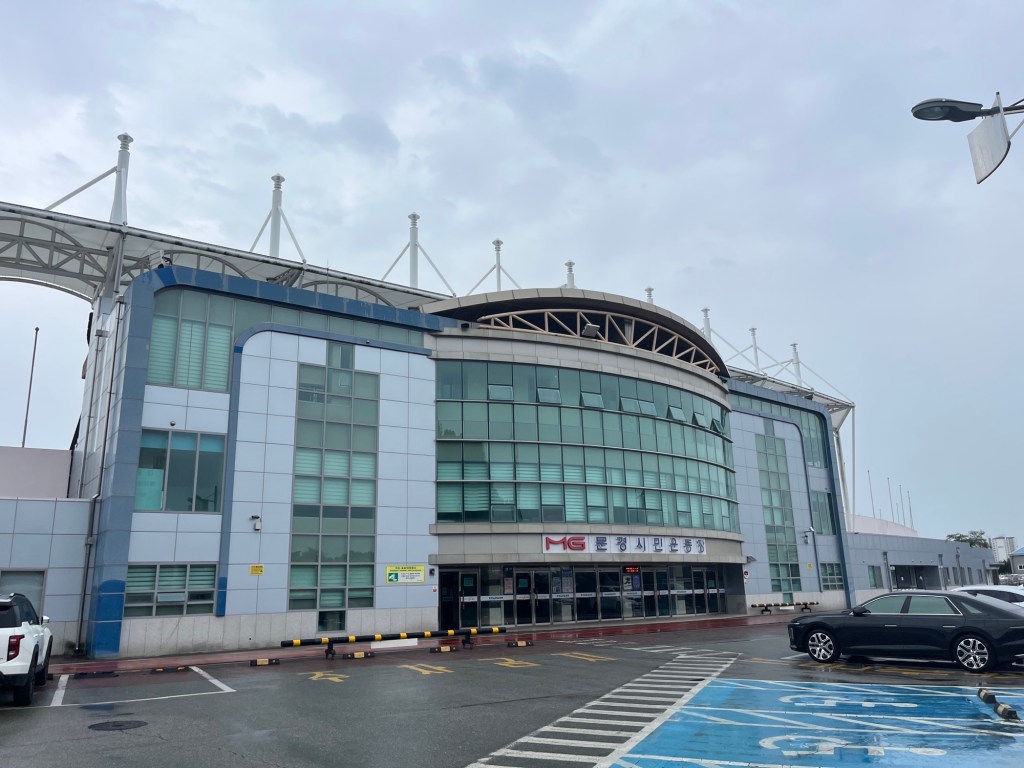
Matches are free to attend, and a ticket is not required. For WK League matches, all fans sit in the main stand on the west side of the stadium, behind the team dugouts. There is a running track, so don’t expect the best views of the pitch. The main stand has a roof but only over the central section — otherwise seating is exposed to the elements. Come prepared, especially in the summer, when watching an afternoon fixture at Mungyeong may mean sitting in direct sunlight at the hottest point of the day. Enter the stands directly via one of the two archways from the car park (not through the stadium building itself). Toilets are located within the stands, with access from the car park side.
In the area
Jeomchon is the main administrative hub of Mungyeong, so there are plenty of options nearby for food and drink, whether you prefer to eat in a restaurant post-match or stock up on snacks to graze while you watch. The closest convenience store is just a few minutes’ walk from the stadium.
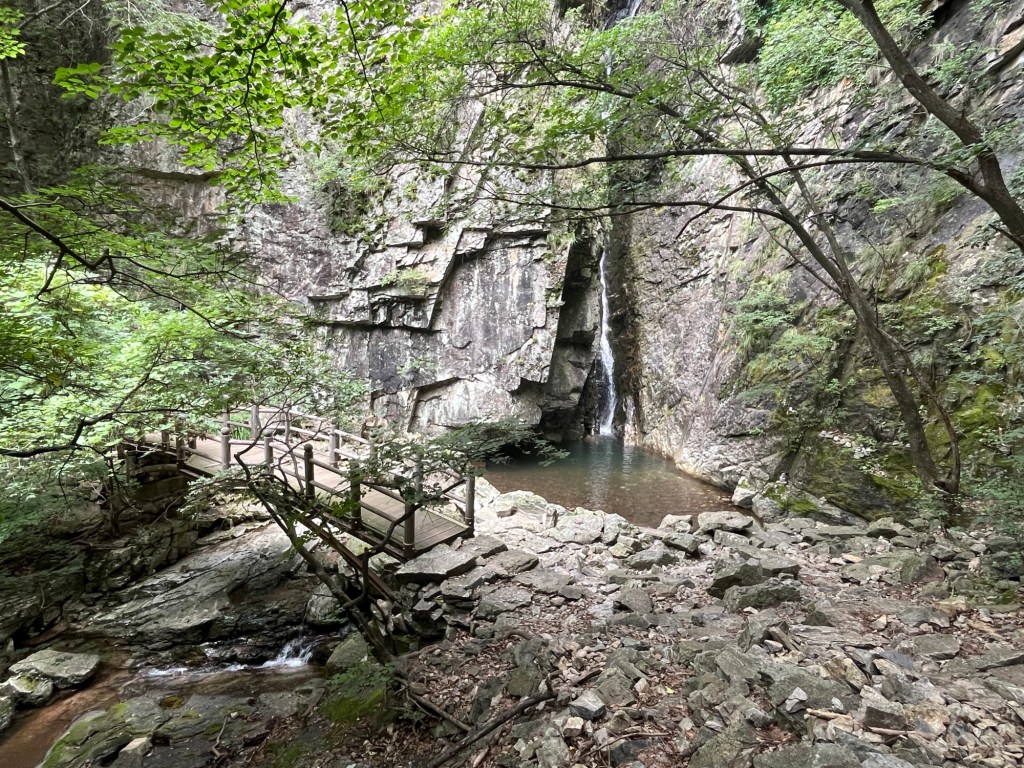
As for sightseeing locally, Mungyeong is close to the Baekdudaegan, the huge moutain range that runs diagonally across the Korean peninsula, so there is no shortage of hiking close by, notably in Songnisan National Park and Woraksan National Park, to the west and north respectively.
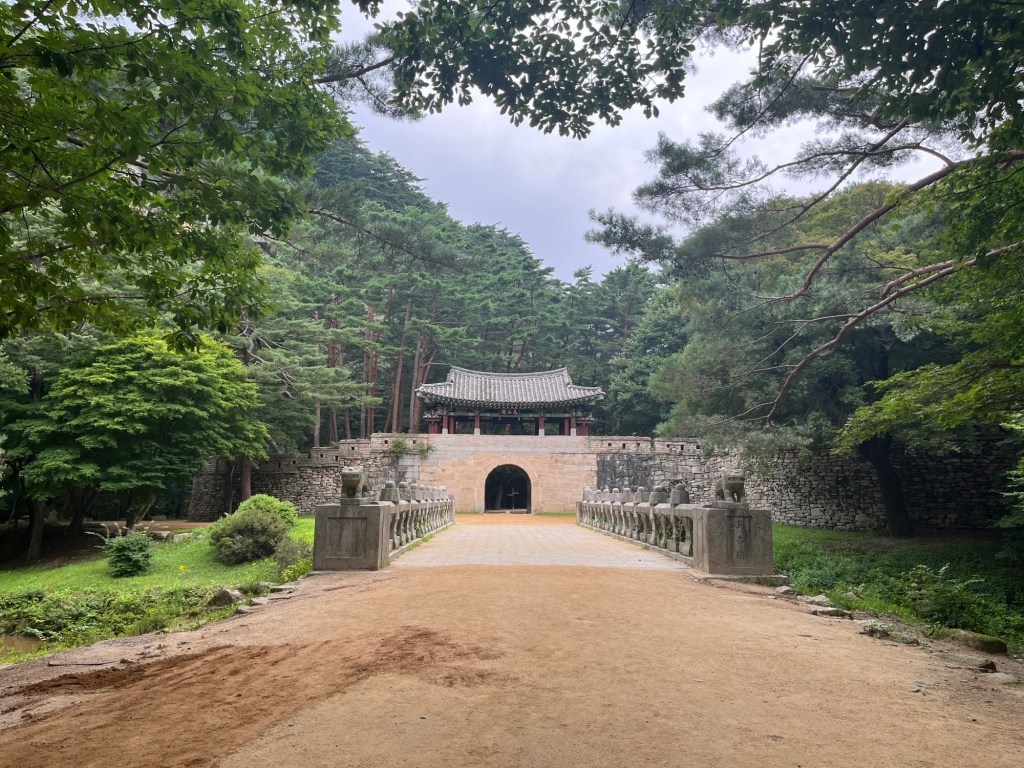
The city is perhaps best known for Mungyeong Saejae, the pass where the ancient road from Busan to Seoul crossed the Sobaek mountains, long before modern engineering brought the tunnels and flyovers abundant in modern Korea. The three gates of Mungyeong Saejae have been reconstructed and maintained as part of a provincial park where visitors can explore trails by foot or hop on a shuttle trolley service to see the main sights.
In case you missed it: Stadium guide: Auxiliary pitch, Seoul World Cup Stadium


 WK League News
Leave a comment