It is highly likely that nobody who attended the AFC Women’s Champions League semi-final or final will ever forget the experience at Suwon Stadium.
The location of the four-club centralised finals stage was confirmed by the Asian Football Confederation only weeks before the matches took place. The participants would come from South Korea, Australia, Japan, and North Korea. Immediately, doubts surfaced over North Korean participation. The draw paired Naegohyang WFC of Pyongyang with local side Suwon FC Women in the semi-finals.
To widespread surprise, Naegohyang applied for — and were granted — visas to enter South Korea. There was no turning back. Something momentous was about to happen.
Naegohyang arrived at Incheon Airport via Beijing utterly expressionless. They collected their luggage, passed through arrivals, and marched straight to their waiting bus. No smiles. No waves. Not even a curious glance.
By all accounts, the arrivals hall was bedlam. Naegohyang were the first North Korean club side ever to visit the South. International teams and North Korean athletes at the 2018 Winter Olympics had crossed the border before, but never a club side — and arguably never under such a cloud of political hostility and suspicion.
None of that tension spilled over at Incheon. In fact, Naegohyang were greeted by hundreds of well-wishers from pro-unification groups and descendants of North Korean refugees. Those same supporters would later sing, dance, and cheer for Naegohyang inside the stadium.
It was only in the aftermath of Naegohyang’s 2-1 come-from-behind semi-final victory over Suwon FC that we gained a clearer picture of their stay in Korea. AFC protocols were reportedly broken, allowing the team to stay at a different hotel from their three title rivals.
Their manager, Ri Yu-il, attended the pre-match press conference — itself never guaranteed. He sat with folded arms, refusing to be drawn on any subject, particularly events beyond the pitch.
The South Korean government reportedly invested heavily in generating support for the club. Banners, flags, stickers, and thundersticks were mass-produced. Suwon City also joined in, lining the streets from the team’s hotel to the stadium with flowers.
Why exactly?
There was certainly no need to create an atmosphere of hostility or suspicion toward the visitors, but was such an extravagant use of taxpayer money necessary at the expense of the other three clubs, including local side Suwon FC Women?
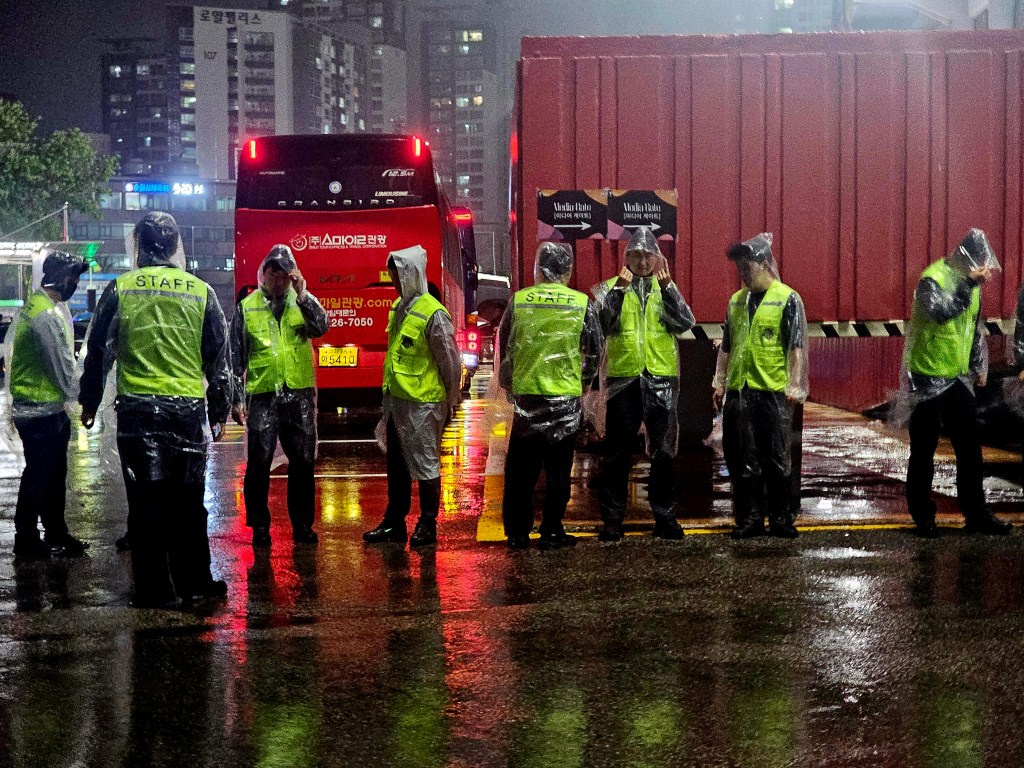
Naegohyang overcame Suwon in torrential rain. The conditions were so severe that it was difficult to get a true measure of either side’s technical quality. Naegohyang recovered from a goal down and survived a late penalty miss from Ji So-yun.
Their superiority over Tokyo Verdy in the final was even more pronounced, despite the narrow 1-0 scoreline. Their goal was met with an enormous roar. It was unmistakably clear who Suwon’s darlings had become.
Yet there was no acknowledgement of that support after either the goal or the final whistle.
The players celebrated among themselves beneath their national flag. Despite receiving something close to red-carpet treatment, Naegohyang remained as stoic and unflinching as they had been upon arrival at Incheon Airport.
It was never their responsibility to mend North-South relations. They came to play football, and they did that better than anyone else. But would a brief nod of appreciation really have been so egregious?
They were offered the hand of friendship that AFC statutes explicitly champion.
Why was it never returned?
You can find an extended version of this article at Below The 38th:


Leave a Reply