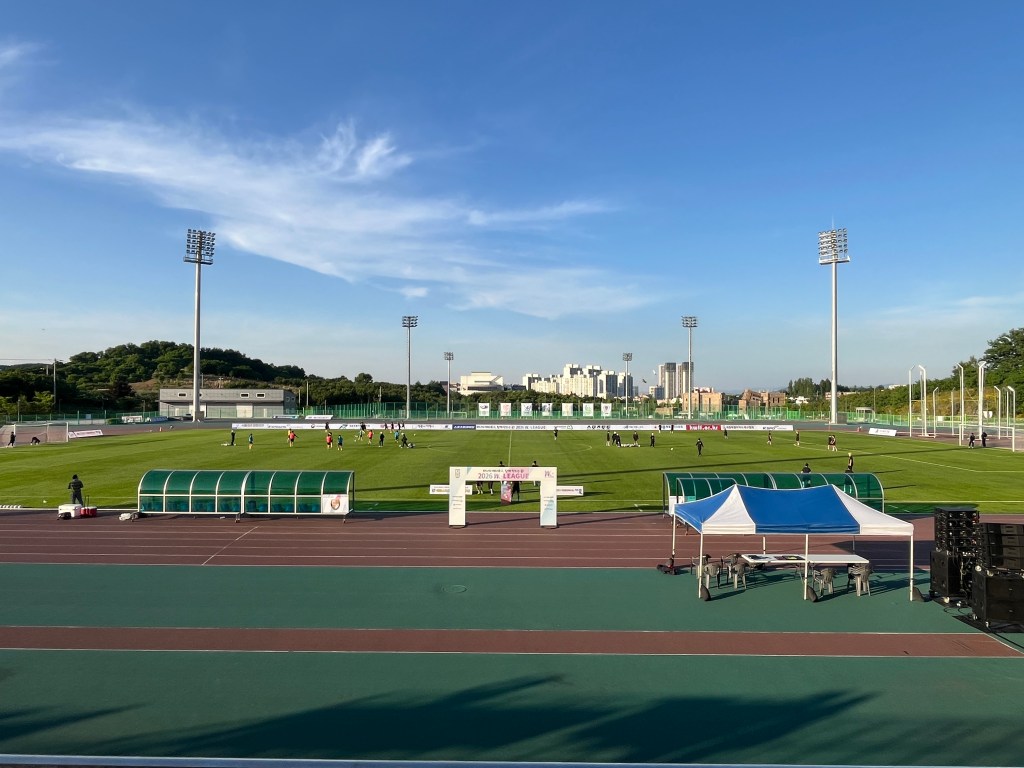
Sportstoto WFC was founded in 2011 and was previously based in Chungbuk, Daejeon, then Gumi, before moving to Sejong in 2019. The team previously played at Sejong’s Central Sports Park, but since 2021, their home ground has been Sejong Civic Stadium in Jochiwon, a suburb to the north of Sejong city.
How to get there
Sejong is a “special self-governing city”, so for administrative purposes it exists on the same level as provinces, but geographically speaking, it sits between Chungbuk, Chungnam, and Daejeon, about 150km south of Seoul. Sejong itself is not served by high speed rail, but fortunately for visitors to Sejong Civic Stadium, nearby Osong is. Osong is only 45 minutes from Seoul by KTX, and is on both the Honam and Gyeongbu lines, meaning direct connections to several cities in the south of the country. From Osong station, a 30~35 minute bus ride on bus 1003 or 1005 will bring you within a few minutes walk of the stadium.
Even closer to the ground is Jochiwon station, which has rail links (albeit slower ones) to a myriad of cities including Seoul, Busan, Daegu, Daejeon, and Suwon. From the station, local buses 11 will take you right to the stadium, although only after taking you on a rather roundabout tour of the area. If you’re in a rush, a taxi from Jochiwon station will take just a few minutes and cost around ₩5000. If you have time to spare and don’t mind walking, it’s roughly 30 minutes on foot, including a couple of uphill stretches.
Jochiwon also has a bus terminal with both high-speed and intercity buses to various regional cities, as well as connections to Incheon Airport.
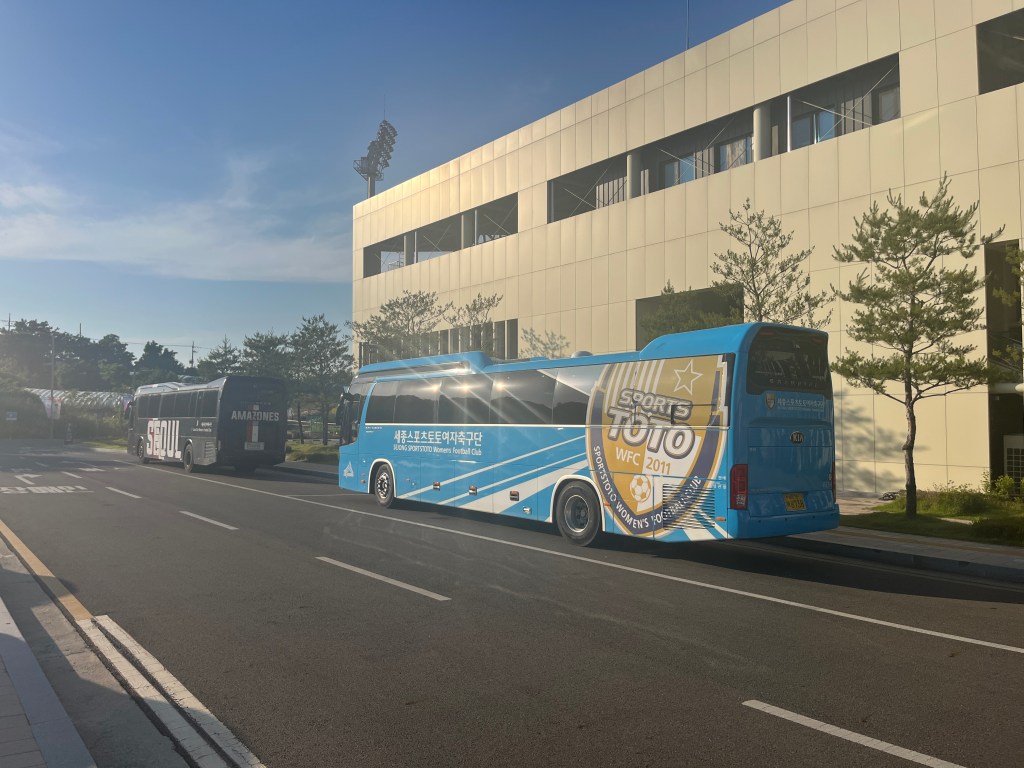
For those arriving by car, simply set your navigation for Sejong Civic Stadium (세종시민운동장). The stadium has its own car park (free of charge) directly behind its only stand, with plenty of space for WK League matchgoers. In the extremely rare event that the car park is full, there is additional parking further down the road, next to the auxiliary pitch.
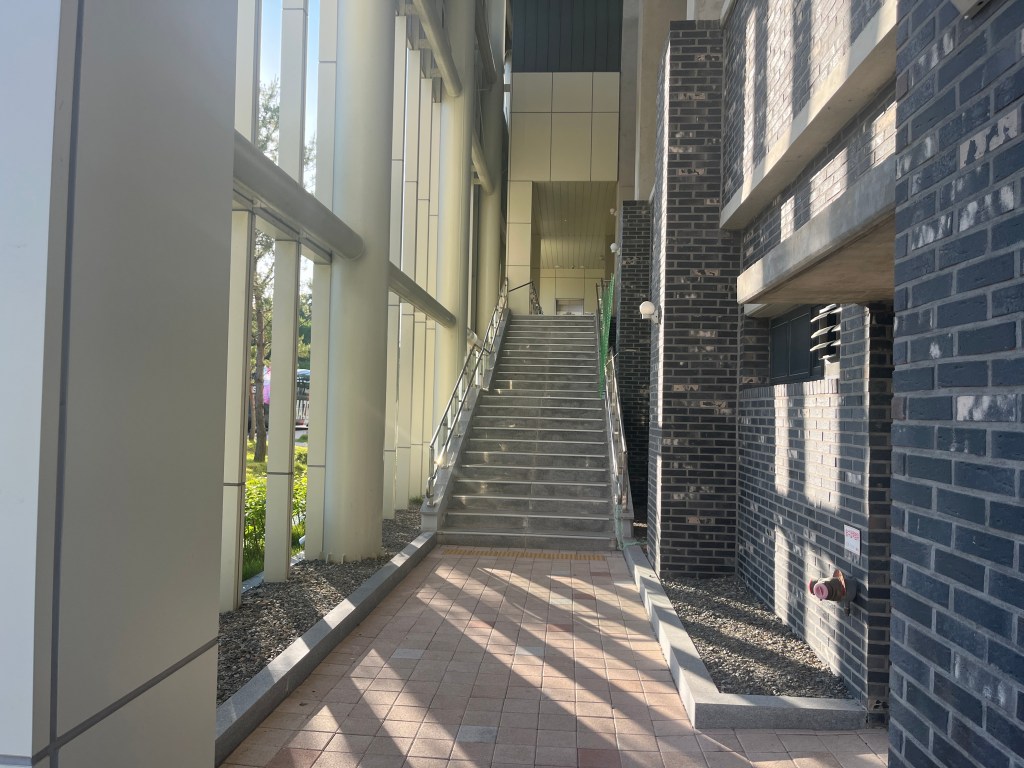
Once you get to the stadium, access for spectators is via the side of the stand, rather than the main entrance. As you come into the complex by car or on foot, you will see an open paved area to the side of the stand. On matchdays, there will most likely be staff from the club in the area, sometimes running matchday events or raffles. Occasionally, there is also a food truck or coffee cart outside the ground. From this area, look for the covered walkway heading behind the stand, with stone stairs heading up to the seating. For those who need it, there is a lift, located next to the main entrance (where players and staff enter) so don’t be afraid to ask staff for access.
What to expect
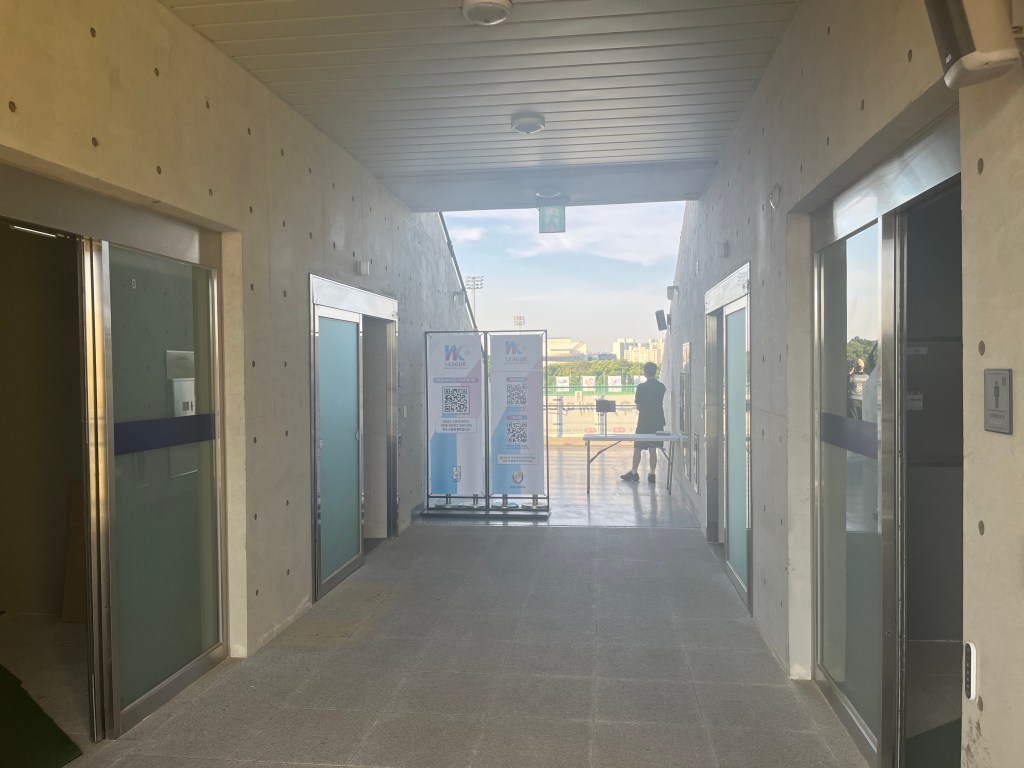
Whether by stairs or lift, once you arrive on the upper level, you will see one central walkway towards the seating, with toilets on either side. Scan your QR code (or register for a temporary one) on the way in, and head in towards the seating. If you are planning to cheer for the away team, head to the right as you go in. If you’re cheering for Sejong, make a left and then head up the steps until you find a spot that suits you. There are spaces for wheelchair users at the front of the seating area.
The stand does have a roof so spectator seating is reasonably well protected from the elements, and it offers good views of the whole pitch. The experience is similar to that at other civic stadiums and sports parks, including Hwacheon KSPO’s home ground Hwacheon Sports Park, and Gangjin Swans’ former home Changnyeong Sports Park. Sejong fans are few in number but they make up for it in enthusiasm, with a lot of young fans among the crowd, and noisy cheers breaking out especially when Sejong are doing well on the pitch.
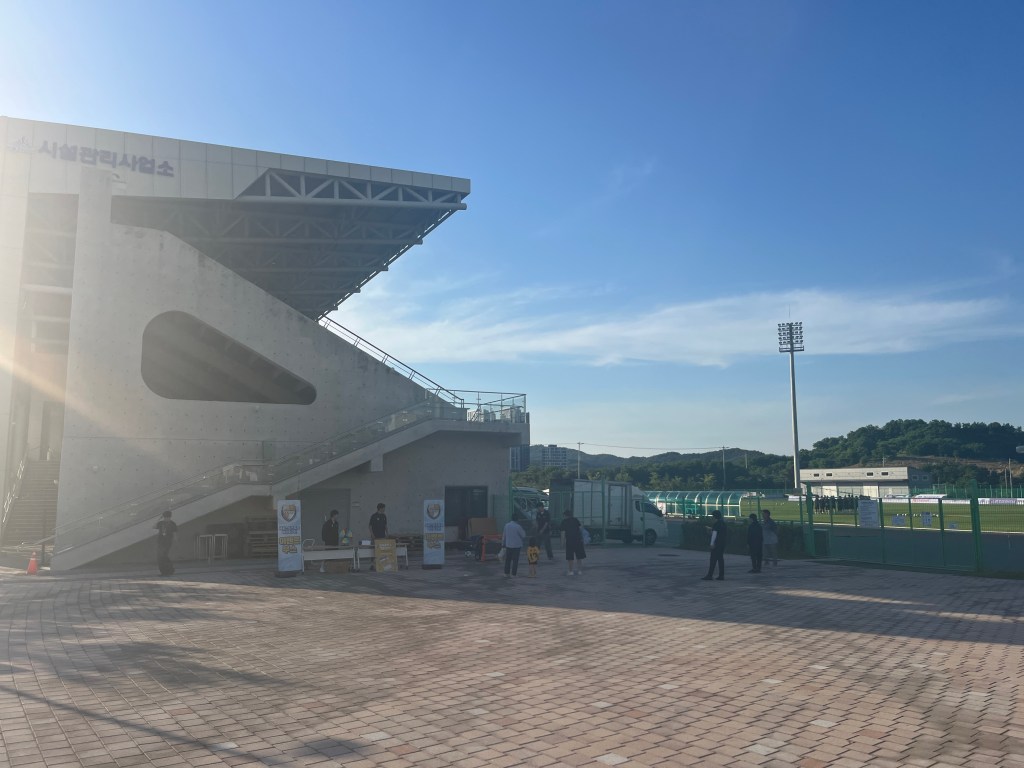
After the match, players’ families and friends, and some fans, will wait outside the ground to greet players as they leave. Most WK League players are generally willing to sign autographs and take pictures with supporters upon request, but as always do be respectful and follow the instructions of club and security staff on the day.
In the area
There are a few cafes, restaurants, and convenience stores reasonably close to the ground, and plenty more as you get closer to central Jochiwon. However, unless there is a coffee cart or food truck on the day that you happen to visit, there are no refreshments available at the ground itself, so best to bring anything you might need.
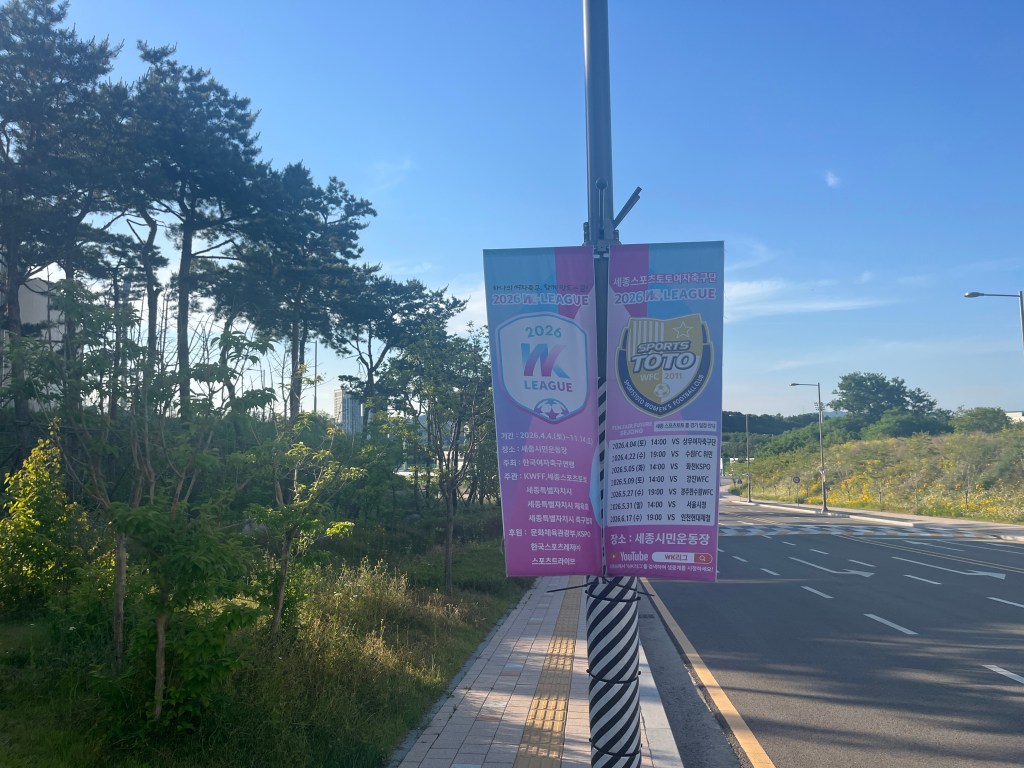
As for what to do if you’re visiting the area, Sejong is a planned city that was founded less than 20 years ago as the administrative capital of South Korea, in a bid to ease congestion in Seoul. As such, the city is not renowned for its historical and cultural offerings, although there are a lot of parks, notably Sejong Lake Park, and Bear Tree Park. Nearby Gongju may have more points of interest for those interested in Korean history. If you prefer outdoor pursuits, Gyeryongsan National Park is also quite close, to the south of Sejong.
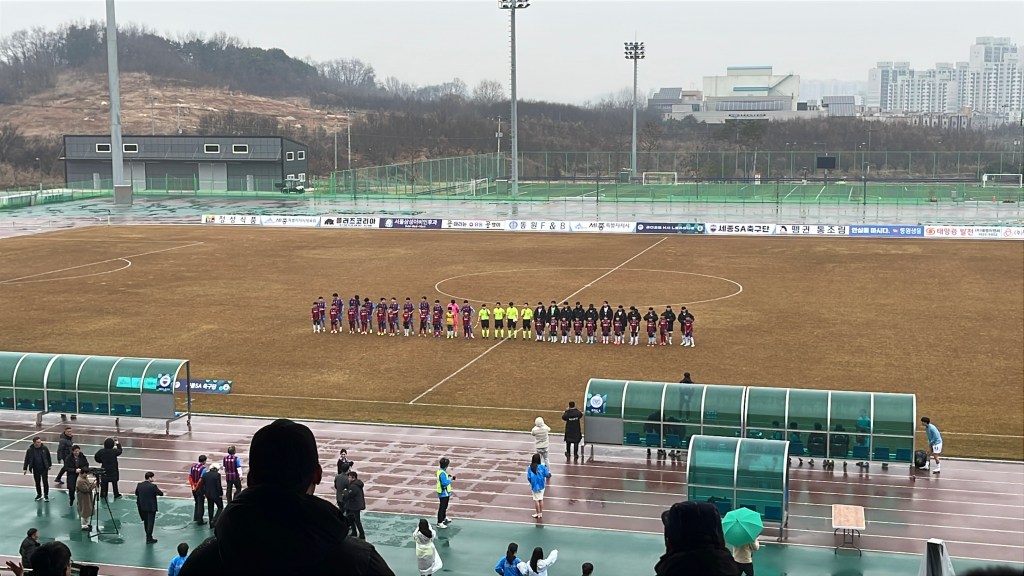
If you are staying in the area you might be able to catch local men’s team Sejong SA FC, who play in the semi-professional K4 League. Sejong SA also play their home matches at Sejong Civic Stadium. Keen groundhoppers will find more men’s football in nearby Cheongju, the home of K League 2 club Chungbuk Cheongju FC. Sejong is also pretty close to Daejeon, where there are two men’s teams: first division side Daejeon Hana Citizen, and K3 outfit Daejeon Korail FC.
In case you missed it: Stadium guide: Pitch 3, Gyeongju Football Park


 WK League News
Leave a comment